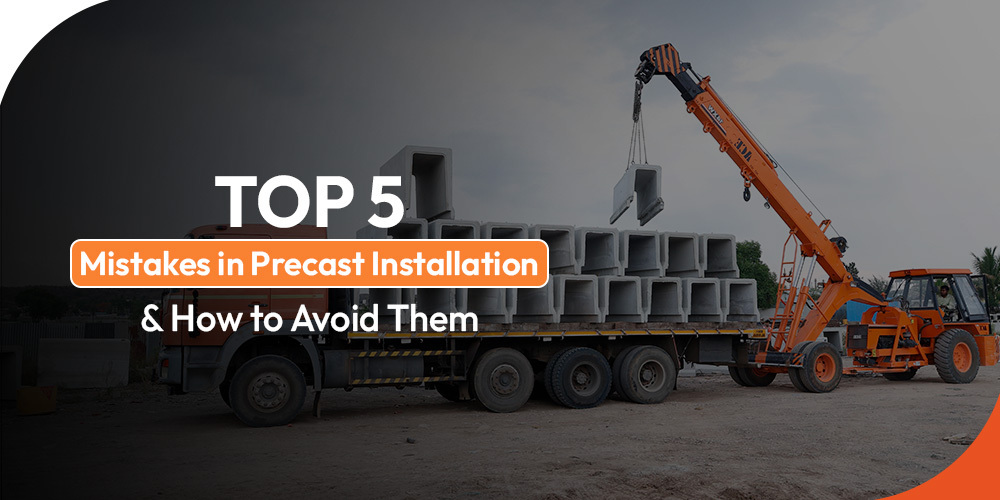
Top 5 Mistakes in Precast Installation and How to Avoid Them
By Snehprecast | November 20, 2025
Precast construction has earned its place as one of the most dependable and time-efficient building methods in the industry. Yet even the strongest precast element can underperform if installation is mishandled.
At Sneh Precast & Consto Solutions, we’ve worked across residential, commercial, and industrial projects long enough to witness one pattern clearly: most installation failures don’t happen because the precast is weak; they happen because the process around it wasn’t managed right.
This guide breaks down the five most common installation mistakes we see in the field and how teams can easily avoid them with the right planning, coordination, and quality controls.
1. Insufficient Site Preparation
A precast element is only as stable as the ground it sits on. One of the most frequent issues we see during installations is inadequate site readiness, poor leveling, incomplete compaction, or unverified soil capacity.
Common Pitfalls
- Uneven base levels
- Sub-optimal soil compaction
- Ignored drainage issues
- Skipped surface cleaning
- Misread soil bearing data
Impact on the Project
- Misalignment during erection
- Long-term structural stress
- Increased chances of cracks
- Costly rework and delays
How to Avoid It
Before the first element arrives:
- Conduct a thorough site audit
- Verify soil bearing capacity with updated test reports
- Ensure proper leveling using a total station
- Prepare clean, well-drained working surfaces
At Sneh Precast & Consto Solutions, our teams run a detailed installation readiness check so clients don’t have to worry about downstream issues.
2. Incorrect Lifting and Handling of Precast Elements
Handling is the silent risk in precast installation. Many elements get damaged long before they reach their final position simply because proper lifting processes weren’t followed.
Common Pitfalls
- Using the wrong lifting points
- Lifting with under-rated cranes
- Worn-out slings and shackles
- Missing or incorrect lifting plans
Impact on the Project
- Edge chipping or corner cracks
- Compromised structural integrity
- Safety hazards for the team
- Delays due to re-fabrication
How to Avoid It
- Follow the manufacturer’s lifting diagram, no exceptions
- Use cranes with a safe working load well above the element’s weight
- Conduct a pre-lift briefing with operators
- Inspect slings, D-shackles, and clamps before every shift
Sneh Precast & Consto Solutions ensures each element is dispatched with a precise lifting guide, and our onsite support team supervises the first lifts to keep operations safe and smooth.
3. Misalignment Due to Tolerance Errors
Even a perfectly cast element loses its value if it’s misaligned during placement. Tolerance errors are among the top causes of rework, timeline breaches, and long-term performance issues.
Common Pitfalls
- Manual measurement errors
- Not following the precast manufacturer’s tolerance sheet
- No cross-checking during installation
- Inadequate supervision during alignment
Impact on the Project
- Gaps between elements
- Joint failures
- Compromised load transfer
- Significant rework and delayed handovers
How to Avoid It
- Use digital measurement tools for layout
- Verify all tolerance sheets before erection begins
- Assign a dedicated alignment supervisor
- Conduct level and plumb checks after every placement
At Sneh Precast & Consto Solutions, precision isn’t optional; every project gets a tolerance-focused installation checklist to ensure structural and aesthetic consistency.
4. Ignoring Joint Treatment and Connection Details
Connections are the real backbone of a precast structure. Even the strongest precast unit can underperform if the joints are incorrectly treated or rushed.
Common Pitfalls
- Inconsistent grout application
- Incorrect or low-grade sealants
- Not following connection drawings
- Insufficient curing time
Impact on the Project
- Water seepage
- Corrosion around steel interfaces
- Reduced structural stability
- Premature maintenance requirements
How to Avoid It
- Use only approved grout, sealants, and bonding materials
- Apply grout uniformly and check for voids
- Follow the exact connection drawings supplied with each project
- Allow proper curing time before load transfer
We work closely with site teams to ensure joints are treated as per design because this single step determines long-term durability.
5. Poor Coordination Between Site Team and Precast Supplier
One of the biggest influencers of installation success is coordination. A disconnect between the project site and precast supplier often leads to scheduling conflicts, stockpiling, incomplete readiness, and avoidable chaos.
Common Pitfalls
- No clarity on delivery sequencing
- Site not ready when the material arrives
- Latest drawings not shared with the precast team
- Last-minute revisions slare owing down the erection
Impact on the Project
- Idle resources
- Damaged elements from unnecessary stockpiling
- Bottlenecks in lifting and installation
- Extended project timelines
How to Avoid It
- Hold weekly coordination meetings
- Synchronize delivery and erection schedules
- Share revised drawings and site updates promptly
- Maintain a buffer plan for contingency situations
At Sneh Precast & Consto Solutions, we strongly believe that execution excellence begins with communication. Our delivery and erection teams operate on well-planned sequencing that matches your project readiness, ensuring zero-waste operations.
Final Thoughts from Sneh Precast & Consto Solutions
Precast is designed to make construction faster, safer, and more predictable, but only when installation is done right. Most failures stem not from material weakness but from coordination gaps, tolerance errors, poorly treated joints, and handling mistakes.
A successful precast installation is built on three things:
- Preparation that leaves no room for guesswork
- Execution led by trained supervisors and skilled riggers
- Partnership between the site team and a dependable precast supplier
At Sneh Precast & Consto Solutions, we stand committed to helping clients get this right. From manufacturing to installation support, we ensure every element performs exactly as designed.