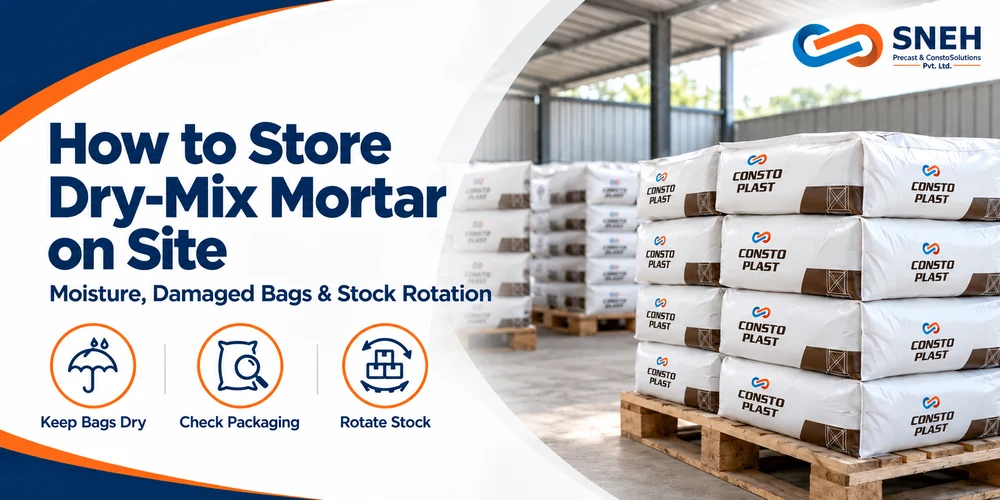
How to Store Dry-Mix Mortar on Site: Moisture, Damaged Bags and Stock Rotation
Dry-mix mortar should be stored in its original sealed packaging, in a dry, covered area protected from moisture. Keep bags on suitable pallets, inspect deliveries for damage, and organise stock so material approaching its expiry date is used first. Always follow the storage conditions printed on the bag or stated in the manufacturer’s technical data sheet.
On a busy construction site, these checks can easily get overlooked. A delivery may arrive before the storage room is ready, or a few unused bags may remain on an exposed floor after work stops. For contractors managing projects in Pune, a clear storage routine helps prevent uncertainty about which materials are fit to use.
This guide explains how to organise dry-mix mortar storage, deal with suspect bags and maintain stock records from delivery to application.
Why Moisture Protection Matters
Cement-based dry-mix mortar is intended to remain dry until it is mixed for use. Moisture entering the packaging can trigger premature hydration and contribute to caking. Storage conditions, packaging integrity and exposure time can all affect the material’s condition.
Rain is only one possible source of moisture. Site teams should also check for damp floors, leaking roofs, nearby washing activities and water entering through unfinished openings.
A bag that looks dry on top may still have been exposed underneath. Inspect the storage location as well as the packaging.
Choose a Suitable Storage Area Before Delivery
Identify the storage space before ordering material. A permanent storeroom is useful, but a temporary store must also protect bags from rain, ground moisture and construction activities.
Keep Bags Raised and Protected
Use sound, dry pallets suitable for the load rather than placing bags directly on the ground. Keep the storage area covered and arrange stacks so their condition can be inspected. Manufacturer guidance for bagged cementitious mortar commonly specifies dry storage, sealed original packaging and, for some products, storage on original pallets.
As a practical site arrangement:
-
Leave access around stacks for inspection and handling.
-
Keep bags away from wet walls and water-use areas.
-
Protect the unloading route as well as the final storage space.
-
Follow the supplier’s stacking instructions and the pallet’s load limits.
-
Keep product labels visible.
Avoid setting a universal stacking height for every mortar product. Bag construction, pallet capacity and the manufacturer’s handling instructions should determine the arrangement.
Check Protection Throughout the Project
A store that was dry at the start of construction may become exposed when nearby work changes. Review it after plumbing work, roof alterations, washing activities or water ingress.
For Pune projects, include these checks during wet weather, but maintain the same storage discipline throughout the year.
Inspect Every Delivery Before Adding It to Stock
Checking bags at delivery makes it easier to identify transport damage and preserve batch information.
A useful receiving checklist includes:
| Check | What to record |
|---|---|
| Product identity | Product name, grade and intended application |
| Batch information | Batch or lot number |
| Dates | Manufacturing date and stated expiry or shelf life |
| Packaging | Tears, punctures, open seams or leakage |
| Moisture exposure | Wet patches, damp packaging or water marks |
| Quantity | Bags received, accepted and held for review |
Photograph suspect bags and their labels before moving them into a separate holding area. Record the concern on the delivery paperwork and contact the supplier promptly.
Storage requirements often depend on packaging remaining sealed and undamaged. A torn bag should therefore be assessed before it is treated as normal stock.
What Should You Do with Damaged Mortar Bags?
The first step is to prevent accidental use. Mark suspect material “Hold—Do Not Use” and keep it separate from accepted stock while the supplier or responsible quality team reviews it.
Torn Packaging
A tear does not reveal how long the material has been exposed or whether contamination has entered.
Record the damage, batch number and known exposure conditions. Ask the supplier whether the material can be accepted under the project’s quality requirements. Simply taping the bag does not establish that its original storage conditions have been maintained.
Wet Bags or Hardened Material
Treat wet packaging, persistent hard lumps or unusual caking as reasons to hold the material for assessment. Moisture-related caking can involve premature reactions within the dry mix.
Do not assume that crushing lumps, sieving the powder or adding extra water restores the product’s specified performance. These actions cannot demonstrate that the material still meets its requirements.
Missing Labels
An apparently intact bag can still be unsuitable for release if its product identity, batch or manufacturing date cannot be established.
Keep it on hold until those details are verified. Appearance alone cannot confirm the mortar type or remaining shelf life.
Follow Product-Specific Shelf Life
Dry-mix mortar does not have one shelf life that applies to every product.
For example, Sneh Precast’s Consto Plast Premix Plaster page states a shelf life of six months from manufacture, provided the bag remains sealed and is stored in a cool, dry place away from sunlight and moisture. That period starts from manufacture, not from delivery to the construction site.
Check each product separately. Do not apply the same storage period automatically to tile adhesive, block-jointing mortar, repair mortar or other bagged products.
Keep these three terms distinct:
-
Shelf life: the stated storage period under specified conditions.
-
Pot life: the usable period after mixing, under the stated conditions.
-
Open time: the working window after spreading, where relevant to the product.
Resealing an opened bag does not restart its shelf life. For unused material in an opened bag, follow the manufacturer’s instructions rather than assuming the unopened-pack storage period still applies.
Organise Stock Rotation Around Expiry Dates
A practical approach is first-expiry, first-out (FEFO): issue suitable stock with the earliest expiry date first.
This is more precise than relying only on first-in, first-out (FIFO). A newly delivered batch may have been manufactured earlier than material already on site.
For example, suppose a store receives two batches of the same product with different expiry dates. If both are accepted and correctly stored, place the earlier-expiring batch in the next issue position—even if it arrived later.
A simple stock register can include:
| Product and batch | Date received | Manufacture date | Expiry date | Bags remaining | Status |
|---|---|---|---|---|---|
| Record from label | Delivery date | Record from label | Confirm from product instructions | Update after issue | Accepted / Hold |
Keep batches identifiable and update the balance when material is issued. Stock rotation must never override a quality hold: damaged or suspect bags should not be used merely because they are older.
Limit Material Exposure at the Work Area
Good storage can be undermined when bags leave the storeroom.
Issue quantities that match planned work, and keep unopened bags protected near the application area. Avoid leaving material beside mixing-water containers, on wet slabs or in exposed corridors.
Plan who will check unused stock at the end of the shift. Unopened bags returning to the store should be inspected before they are placed back with accepted material.
For opened bags, preserve the label and record when they were opened. Obtain product-specific guidance on whether and how any remaining powder may be retained.
Use a Short Daily Storage Check
Assign one person to check the store and maintain the records. A brief inspection should answer five questions:
-
Is the storage area dry and protected?
-
Are pallets and stacks stable?
-
Are any bags damaged, wet or leaking?
-
Is the earliest-expiring accepted stock accessible?
-
Is held material clearly separated?
These checks create a clear link between receiving, storage and use. They also help the team resolve concerns before a questionable bag reaches the mixer.
Plan Mortar Supply Around Your Site’s Capacity
Order quantities that suit both the work programme and the available protected storage space. Keeping more material on site than the store can accommodate makes inspection and rotation harder.
Explore Sneh Precast’s Consto mortar solutions for your application, and confirm the latest packaging, shelf-life and storage instructions for the selected product.
For a project in Pune, contact Sneh Precast with your material requirements and planned application schedule. Clear product information and a consistent storage routine help your team keep accepted material ready for use.